Sunday, May 03, 2009

Course: UNESCO: Agenda for the 21st Century


A graduate seminar has been offered in the Spring semester at George Washington University for each of the past three years titled "UNESCO: Agenda for the 21st Century". Most students have been at the Masters level. The students meet for two hours, once per week for 14 weeks. The course is offered within the International Education Program of the university, but is open to students from other departments and even from other universities in the Washington region. The course is coordinated by officers of Americans for UNESCO, and many members of the Board of Directors have participated actively in its sessions and by advising students on class projects.

Click here for the syllabus.

Prior to the class there was a posting that explains a key orientation for the effort:

How to Understand Intergovernmental Organizations

During the las semester each of the sessions of the class was described briefly in a blog posting. Those postings are:
  1. UNESCO: Agenda for the 21st Century: The first session is a description of the course led by the coordinators, Frank Method and John Daly.
  2. The Dick and Ray Show: A presentation on the early history of UNESCO by Richard Arndt and Raymond Wanner, two experts on the topic.
  3. Education for All: The flagship effort of the UNESCO education program in the first of the student led classes. See also Education for All: Class of 2015, a video used in the class.
  4. The Other Education Programs of UNESCO: This first review of a specific program of UNESCO is described in some detail; a student led class.
  5. After EFA: What Next: This was an exercise in which students played the roles of UNESCO's educational stakeholders, led by Frank Method.
  6. UNESCO's World Heritage Center: The World Heritage program is UNESCO's best known and best loved effort; a student led class.
  7. Comments on the Budget of UNESCO: This was a supplement to the classroom materials, explaining the 2008-2009 budget in broad terms.
  8. Comments on the Culture Program: Describing the rest of the Culture program of UNESCO; a student led session.
  9. Class Exercise: ExBrd Working Group on Old City of Jerusalem: An exercise in which students played the roles of a Executive Board working group that met in 2007, led by John Daly.
  10. A Comment on the Natural Science Program of UNESCO: A student led class.
  11. Class: The Social and Human Sciences Program of UNESCO: A student led class.
  12. Why is UNESCO the Way it is? This posting summarized a means of understanding UNESCO developed in classes, and was supplementary to the class sessions.
  13. Class: The UNESCO Communication and Information Program: A student led class.
  14. Class: U.S. Foreign Policy and UNESCO: A view from the top: Michael Southwick, former Deputy Assistant Secretary of State for International Organizations presented this class.
  15. Class: UNESCO: Agenda for the 21st Century: A panel of Raymond Wanner, Frank Method and John Daly and a discussion of the future of UNESCO.
  16. Class: The Final Session: The students presented their class projects, but the posting also makes some final comments on the overall course.
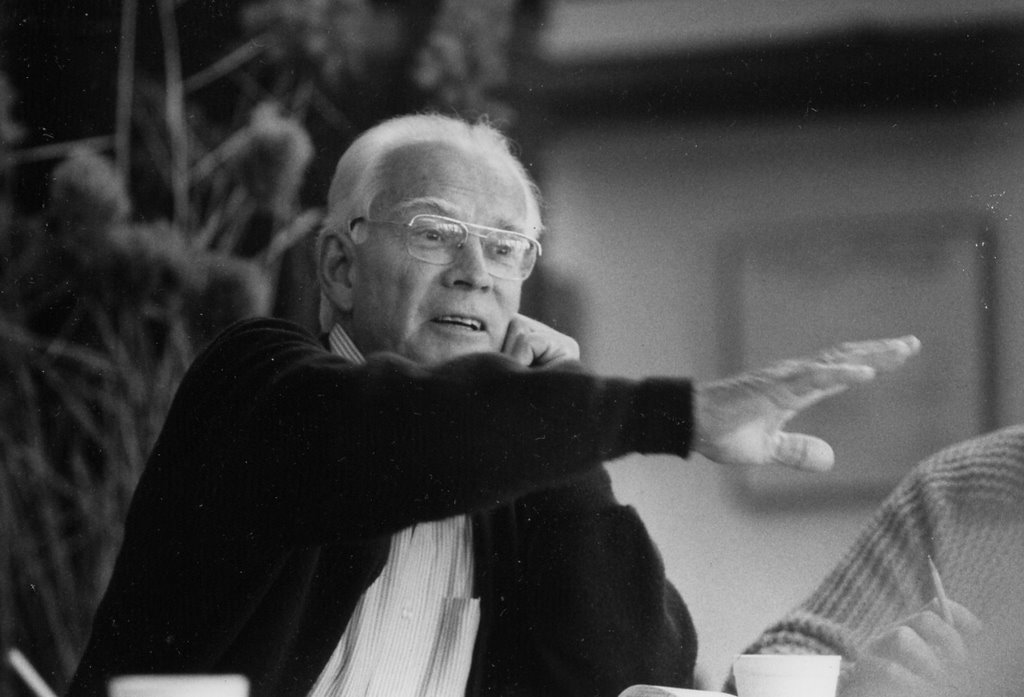
Frank Method, co-coordinator of the course
introduces Dick Arndt

Saturday, March 14, 2009

UNESCO and creation of CERN; CERN and the creation of the World Wide Web.

Aerial view of the CERN site just outside Geneva.Image © CERN.

The Creation of CERN


At the end of the Second World War, European science was no longer the crème de la crème. Following the example of the now mushrooming international organizations, a handful of visionary scientists imagined creating a European atomic physics laboratory. Raoul Dautry, Pierre Auger and Lew Kowarski in France, Edoardo Amaldi in Italy and Niels Bohr in Denmark were among these pioneers. Such a laboratory would not only unite European scientists but also allow them to share the increasing costs of nuclear physics facilities.
French physicist Louis de Broglie put the first official proposal for the creation of a European laboratory forward at the European Cultural Conference in Lausanne in December 1949. A further push came at the fifth UNESCO General Conference, held in Florence in June 1950, where the American Nobel laureate physicist, Isidor Rabi tabled a resolution authorizing UNESCO to "assist and encourage the formation of regional research laboratories in order to increase international scientific collaboration…" At an intergovernmental meeting of UNESCO in Paris in December 1951, the first resolution concerning the establishment of a European Council for Nuclear Research was adopted. Two months later, 11 countries signed an agreement establishing the provisional Council – the acronym CERN was born. At the provisional Council's third session in October 1952, Geneva was chosen as the site of the future Laboratory. This choice was finally ratified in a referendum organized by the Canton of Geneva in June 1953.
Read more about the history of CERN


The Creation of the World Wide Web


Twenty years ago this month, something happened at CERN that would change the world forever: Tim Berners-Lee handed a document to his supervisor Mike Sendall entitled "Information Management : a Proposal". "Vague, but exciting" is how Mike described it, and he gave Tim the nod to take his proposal forward. The following year, the World Wide Web was born.

Check out the following websites:

Friday, January 02, 2009

Agenda for Americans for UNESCO for 2009

The Board of Directors of Americans for UNESCO will meet on January 13th to consider the program of activities for 2009 for the organization. Dick Nobbe has provided this list of possible activities to be considered. Your comments are invited:
  1. GWU UNESCO Course - Offer for a third time a course on UNESCO for credit at George Washington University (N.B. AU has broken new ground in this area and there appears to be strong administrative and student interest in the topic. And AU has plenty of competence to handle it under the animated leadership of John Daly.).
  2. GWU UNESCO Club - Assist further the students at GWU in founding a UNESCO Club. (N.B. As I understand it, this project is still in the developmental stage. We should regard this activity as resource building for American participation in UNESCO's youth programs which have gained in status and now become a permanent feature of UNESCO General Conference sessions .I personally have a valuable collection of books, magazines, reports etc which I would be glad to donate to its library. Perhaps others do too.).
  3. U.S. National Commission for UNESCO - (N.B. We need to follow up on our transition paper calling for the restructuring of the US National Commission for UNESCO to its original legislative role of influencing policy direction at State and expanding knowledge about UNESCO's activities to the public.).
  4. The Ray Wanner Manuscript- (N.B. Any organization worth its salt must publish something periodically (besides minutes of its meetings) if it is to remain visible and viable.We have in hand a unique , ready-to-go publication which needs to see the light of day. AU should take advantage of GWU's lay-out and composition department while we still have access to their services. Funding may be difficult, but we should calculate the cost, earmark a portion of AU's budget to it, and pass the hat .My experience is that original publications of this kind eventually obtain funding.)
  5. UNESCO Reports of Meetings- (N.B. The principal end-product of UNESCO is the reports of its numerous technical meetings at considerable cost,yet they seldom see the light of day. AU should undertake a study of this problem with the view to cataloguing some of the more important ones for internet or website distribution to higher education institutions, NGOs, and other technical bodies in the US.)
  6. New US`Ambassador to UNESCO - Arrange a substantive dinner meeting for the new Ambassador early in the game accompanied with selective written materials such as our transition paper, previous brochure, and UNESCO publication on national commissions. (N.B. We did this for the previous US Ambassador and it was a great success by all accounts).
  7. Former US`Ambassador - Solicit her interest post haste in becoming an AU Board member in a Vice-President capacity. (N.B.In my opinion, she is very knowledgeable about UNESCO's programs and activities, is an excellent spokesperson and could be a real resource for us. Besides, she has undergone an epiphany, and we need converts and money for our cause. Nothing ventured, nothing gained !)
  8. UNESCO ADG Briefings. Arrange for one or two seminars during CY 2009 on a UNESCO sector.(N.B. It will be recalled that AU did this in cooperation with the UN Foundation and the UNESCO Liaison Office in New York in 2008 involving the ADG for Communications, and it was a big success. .I would give priority to the Social Science Sector after the incumbent ADG leaves since knowledge about the entirety of this sector's program is practically non-existent in the US Government and private sector).
  9. AU Social Science and Natural Sciences Committees (N.B.) These two committees need to be strengthened. For all practical purposes, they are leaderless or memberless.)
  10. US MAB Committee- Play a lead role in assisting the State Department to encourage Congress to provide support for a robust role of the US MAB Committee in UNESCO's program (N.B. I realize this matter is on State's agenda, but AU could help if we brought on Tom Gilbert and Sam McKee as AU Board members since both have formerly and prominently been involved with this program).
  11. Sid Passman's UNESCO News Bulletins. Explore with Sid ways of expanding his audience to include not just AU members, but all NatCom members, selective higher education institutions, NGOs (especially religious ones), and philanthropic foundations (N.B. I realize that not everyone is enthralled by what Sid selects but the fact remains Sid is the only source providing us with information about the totality of UNESCO activities., and he devotes considerable time to this effort. Frankly, without. his contributions, most of us would be in the dark about what UNESCO does).
  12. Universal Access to Cyberspace - Continue to monitor UNESCO's program activities contributing to the creation of an international strategic partnership to reduce the digital divide and to the development of knowledge societies through the implementation of the WSIS Plan of Action. (N.B. AU should team up with other NGOs to further this goal and participate in important international conferences to keep abreast of developments in this field).
I would add to this list, continued production of this blog and management of the AU website, with the possible recruitment of added volunteers to provide content.


Friday, August 29, 2008

UNESCO and Governance of the New Invisible College

In her book, The New Invisible College: Science for Development, Dr. Caroline Wagner describes the growth of global science and the even more rapid growth of international collaboration among scientists. Today science is truly a global enterprise, more so than might have been imagined when UNESCO was founded more than six decades ago. Indeed, the world's expenditure on science is greater than the national income of all but a handful of countries.

According to the National Science Foundation, the number of scientific journal articles increased by 2.3 percent per year between 1995 and 2005. From 1988 to 2008, the share of publications with authors from multiple institutions grew from 40 to 61 percent. In the same time, the portion of publications with authors from institutions in more than one nation increased from eight to 20 percent.

In the final chapter of her book, Dr. Wagner considers the governance of this new invisible college of collaborating scientists building a grand edifice of knowledge. In this context governance is:
The use of institutions, structures of authority and collaboration to allocate resources and coordinate or control activity in in the society of science to achieve desired ends.
Her discussion raises an important issue. How can a self-organizing international network of many millions of scientists be governed? Indeed, at issue is whether such a network -- of people who have been trained to think independently, who come from many cultures and who live in many nations -- can be governed at all. Yet clearly mankind will benefit from the appropriate allocation of scientific resources and coordination of scientific activity to advance knowledge and understanding of the world, including the applied science to help us live better.
The term "invisible college" was coined by the Robert Boyle, the 17th century savant, to describe the informal group of scientists who were exchanging information and views, and which included such other luminaries as Robert Hooke and Christopher Wren, a group that was later to form the nucleus of the Royal Society. The term was later used by Derek de Solla Price, the great historian of science, to describe the informal networks of scientists that have formed in the information age. The term is now widely used. In Dr. Caroline Wagner's hands the term refers to "an invisible college of researchers who collaborate not because they are told to but because they want to, who work together not because they share a laboratory or even a discipline but because they can offer each other complementary insight, knowledge, or skills."
I believe that not only is governance of the invisible college possible, but that the evolution of governance institutions is well under way. Various aspects of that governance are addressed in the following paragraphs, with emphasis on the role of UNESCO in each aspect of governance.

UNESCO's Central Role in Global Science

The UNESCO Institute for Statistics plays a central role in the global system providing information on the scientific enterprise. It not only collects and publishes comparative information on the scientific resources and activities of the nations of the world, UNESCO also advises countries on how to collect such information in ways to assure comparability among nations. The UNESCO Science Report, the flagship publication of the science programs of UNESCO, provides an overview of the world's science, complemented by other supporting publications.

The World Science Conference, held in 1999, was one of a series of UNESCO sponsored conferences, held within the framework of a more extensive conferences of the United Nations system, that served to catalyze global attention on science and build consensus among nations on the importance of science and on directions for the further development of science. In the more recent World Summit on the Information Society, cosponsored by UNESCO and the International Telecommunications Union, UNESCO helped bring the participants to the realization that the development of science is central to the development of knowledge societies.

While other decentralized agencies of the United Nations system have important scientific interests (e.g. WHO and biomedical sciences, FAO and agricultural sciences), it is UNESCO that leads in these efforts to provide information on the global invisible college and to convene leaders to discuss its state, future and priorities.

The U.S. Perspective

Over the last half century, Americans have often lead in the institutionalization of mechanisms in UNESCO to promote collaboration and coordination of international scientific efforts, with important benefits to the American scientific as well as the world scientific enterprise, and indeed important social and economic benefits to the United States as well as other nations.

The U.S. share of total world scientific article output fell between 1995 and 2005, from 34 to 29 percent. We see many nations, such as China, India, Russia and Brazil overcoming their historical poverty through rapid economic growth, and as their wealth increases they are rapidly building their scientific capacities. Those and similar trends will no doubt continue to increase the amount of scientific knowledge that will be developed abroad.

That trend is to America's advantage as other nations assume more of the burden of contributing to the global stock of scientific knowledge, but only if Americans effectively tap into that stock effectively. United States science policy already deals seriously with the acquisition of scientific knowledge created abroad, and that emphasis must increase in the future. It also is in our national interest to take measures to help assure that the international creation of scientific knowledge and understanding continues and that the global scientific system deals with issues that are important to us.

The issue of the governance of international scientific systems appears often to be misunderstood. Institutionalizing new cross-border systems for the governance of science need not imply a loss of national sovereignty over domestic science. For example, the first intergovernmental organizations, which were created in the 19th century, were the International Telecommunications Union and the International Postal Union; Those intergovernmental bodies simply recognized that if people wanted to send telegrams or letters between nations, there needed to be agreements among the nations involved as to how those communications were to be handled. Similarly, to prevent the spread of infectious diseases, the nations of the Americas, with U.S. leadership created the Pan American Sanitary Bureau in 1902 to improve the cooperation and coordination among national public health programs; it was so successful that the United States later led in the creation of the World Health Organization. We are familiar with these systems, and find them no threat to our liberty and indeed supportive of our interests. Nor is UNESCO in its role encouraging the better coordination of international scientific activities.
Structural complexities and the intrinsic dynamism of science and technology pose challenges to policy makers, but they seem almost manageable compared to the challenges posed by extrinsic forces. Among these are globalization and the impact of global economic development on the environment.
John Marburger, President Bush's Science Advisor
OECD High Level Meeting of the Committee for Science and Technology Policy

March 2008
The "governance of science" does not imply "government". Indeed, science has been called self-governing in that voluntary, non-governmental organizations in the scientific community invoke their own internal mechanisms to prevent scientific fraud and plagiarism. Again, American scientific societies play a crucial role in the global network of scientific unions.

National Governmental Policies

Quite reasonably Dr. Wagner in her book focuses considerable attention on governments and their role in governance of the global scientific system. Governments are major funders of fundamental science, and science to produce knowledge as a public good. They govern science within their borders, including the scientific activities of academia and the private sectors. More to the point, as mentioned above, national governments have nowhere delegated sovereignty over their domestic science to international or intergovernmental bodies.

Dr. Wagner makes a very pertinent observation that all countries must now recognize that it is often not only more efficient but also more practical to obtain scientific information that they need from abroad than from domestic sources. That information can be obtained from the public domain or by collaborations between homeland and foreign scientists. She recognizes that nations must build their internal scientific capacity and support their scientists in their work, but that domestic concern must be matched by an international orientation as well.

Thus all nations must build their science policies around the acquisition of scientific information from abroad and the facilitation of international collaboration by its scientists.

U.S. international science policy must also be seen as closely linked to our soft diplomacy and our development assistance policy. We are still by far the world's scientifically strongest nation, and the use of our science capacity to train scientists from other countries and to help them build their scientific capacity is greatly appreciated by those other countries. Only with the leadership of the American scientific and technological community will the world make adequate progress in the fight against hunger and disease, and in the safeguarding of the environment and the sustainable exploitation of natural resources -- key efforts to both our soft diplomacy and our developoment assistance. Moreover, by helping others, we can help establish the linkages between U.S. and foreign scientists that will be so important in the future.

The Private Sector

The rise of multinational companies in an increasingly global economy raises significant issues of the role of corporations in international science. These corporations fund a great deal of science, and indeed carry out a great deal of research within their corporate structures. Increasingly the multinationals are moving their research activities from country to country, seeking lower research costs, higher research quality, or access to national markets. There seems little alternative than to allow the corporations to make their own science strategies under the discipline of the market, although national governments can and do regulate research activities of corporations doing business within their borders, and offer incentives and sanctions intended to assure appropriate corporate science is done within their borders and in support of their economic and other needs. Perhaps more importantly, governments survey the research portfolio of the private, for-profit sector to detect under funded areas which require public intervention. Interestingly, UNESCO is establishing partnerships with some of the leading research companies in the world, and thus is indirectly and subtlely guiding their scientific efforts.

Civil society plays a smaller role in international science, but foundations have been quite important and it may well be that it is increasingly so. U.S. experience is that foundations and non-governmental organizations provide an important complement to government funding of non-commercial science. The government's role has been to establish rules that make donations to such organizations tax deductible, and regulate to ensure that civil society organizations use their resources to promote charitable causes. UNESCO is unique among intergovernmental organizations in that its constitution calls for National Commissions in each member state, and these national commissions involve civil society in the governance of UNESCO as well as directly link to UNESCO and each other in support of UNESCO's programs.

Civil society includes the scientific professional societies, and UNESCO has always been closely linked to the International Council for Science, the umbrella organization for the group of international scientific unions. These member supported organizations, as described above, not only play a key role in the governance of the invisible college, but also through their journals play the central role in the diffusion of new scientific knowledge; their archives are the first repository of the body of this knowledge.


Institutions to Promote Trust

The institutionalization of systems of international collaboration require there to be trust among the collaborators. A small but significant effort that establishes that trust is the effort of organizations such as UNESCO and the European Union to establish standard setting conventions that assure that educational credentials are comparable among participating nations. It is really important to scientists choosing collaborators that the doctorate held by a potential collaborator is a valid certification of that person's ability to conduct research professionally.

More importantly, science is somewhat self regulating. Professional journals and peer review provide systems to prevent scientific fraud and to warrant the quality of scientific work while disseminating scientific information in the public domain. Most important, the scientific process which promotes independent replication of scientific results provides a means for preventing errors from creeping onto the corpus of scientific knowledge. In the United States, and in other nations, being convicted of scientific misconduct results not only in public embarrassment and the loss of government grants, but also loss of academic status and facing a lifetime of suspicion in peer review processes.

The UN decentralized agencies also play an important, albeit little recognized role, in building trust in the scientific community. For example, the World Health Organization establishes peer review mechanisms using the results of biomedical research to establish guidelines for medical practice which are widely accepted in developing nations.

UNESCO has an important role in such trust building. For example, its Intergovernmental Oceanographic Commission provides a mechanism which establishes trust among the states whose waters are traversed by research ships on their voyages; its International Hydrological Program similarly provides a trusted agent for cross border hydrological studies. UNESCO's World Network of Biosphere Reserves provides a mechanism by which countries can commit to cooperation in the operation of this global network and the research to establish means for sustainable preservation of biodiversity.

The UNESCO Chairs and Program and its Twinning and Networking Program" was conceived as a way to advance research, training and program development in higher education by building university networks and encouraging inter-university cooperation through transfer of knowledge across borders." The keystone universities in these programs are vetted through a careful selection program in both the National Commissions of UNESCO and the UNESCO Secretariat and governing bodies, thereby assuring that they are worthy of trust. Since the programs inception in 1992, more than 350 chairs and networks have been established in the sciences, and the program continues.

In other cases bilateral or multilateral agreements are created, such as for the financing of megaprojects that are cooperatively financed by several nations, and which offer facilities to be used by multinational networks of collaborators. Two of the landmark examples of internationally funded scientific centers are direct outcomes of UNESCO's efforts: CERN (the European Organization for Nuclear Research) and the ICTP (the Abdus Salam International Center for Theoretical Physics).

The Ethical Conduct of Science

Not only are scientists supposed to be honest about the work that they do and the results that they produce, they must act ethically in their treatment of human subjects, in their treatment of animals that are involved in their research, and in the containment of risks that their research might cause the public or the environment. While many decentralized United Nations agencies work to assure ethical conduct of science within their spheres of influence, UNESCO has a central role through its Bioethics Program and its World Commission on the Ethics of Scientific Knowledge and Technology (COMEST) and its Conference series: Ethics around the World

Financing of Global Science as a Public Good

The International Agricultural Research Centers are perhaps a prototypical network that meets a global need, and requires funding from a consortium of donors. The network, governed by the Consortium for International Agricultural Research with its scientific advisory bodies, is essentially a club of funding bodies -- governments and foundations. The IARCs serve a global purpose in the maintenance of seed banks protecting the biodiversity of mankind's major crop species, making it available as a public good. They also are the keystone in a network of national agricultural research and extension services, providing improved varieties to be adapted to local conditions by national bodies, and increasingly interacting with global private sector seed and agricultural chemistry industries. The system in part was created in response to the fact that poor, developing nations did not have the keystone agricultural research capacity that was needed to fight hunger, promote rural development, and prevent famines. The international agricultural research system has been regarded as the most fully articulated such system, but its recent lack of funding indicate the remaining inadequacy of that form of international scientific governance.

While other initiatives involving multinational support for centers of research excellence have been introduced their success is mixed. CERN, a facility for nuclear research in Europe, financed by a club of rich nations, has been successful over decades, and counts such successes as the invention of the World Wide Web. So too, the International Center for Diarrheal Disease Research, Bangladesh (IDDRB) has been in operation for decades and can point to many accomplishments, including Oral Rehydration Therapy. But the Central American system of regional research and development centers has had continued difficulties raising support among its member states.

UNESCO has created a decentralized group of Centers and Institutes in education and the sciences. In some cases it provides core funding from its assessed budgets, matched by voluntary contributions for the funding of these organizations. In others, it simply provides an organizational umbrella and legitimization for a Center which is financed by member nations. Proposals to add an organization to this group are carefully evaluated, and are accepted only after recommendation by UNESCO's Executive Board and a vote by its General Conference. Thus UNESCO does not accept responsibility for the success of such an organization lightly. On the other hand, the on-the-record support for such an organization by the community of 193 member states of UNESCO provides it great credibility.

The Application of Scientific Knowledge

For most of us, knowledge without application is unsatisfactory. For all of us, the failure of so many governments to make policies and implement programs using fully the available knowledge leads to tragedy. If the governance of science involves the coordination and organization of scientific ends, then efforts to improve the utilization of scientific results by governments are important aspects of governance. UNESCO's flagship effort in its Social and Human Sciences Program is "The Management of Social Transitions". The MOST Program's primary purpose is to transfer relevant Social Sciences research findings and data to decision-makers and other stakeholders. MOST focuses on building efficient bridges between research, policy and practice. That program promotes a culture of evidence-based policy-making – nationally, regionally and internationally.

Donor Assistance for Building Scientific Capacity

The International Financial Institutions, the United Nations programs and decentralized agencies, and bilateral donors all have programs to support the creation of scientific capacity in developing nations, and of the capacity to govern science in those nations. UNESCO's Basic and Engineering Science Program and its Science Policy and Sustainable Development Program are especially important in this respect. UNESCO also has a number of regional offices for science, and a strong emphasis on building scientific capacity in Africa in support of the NEPAD program defined by African leaders themselves.

The coordination of the portfolio of donor efforts are sometimes accomplished by donor coordinating bodies, and sometimes by interlocking directorates as the governments of the bilateral donors and the major recipients govern the intergovernmental organizations. All of these bodies, however, benefit from the statistics and information that UNESCO has helped to develop internationally.

Final Comment

As the global Invisible College is growing and evolving, so too are the institutional infrastructure providing the resources the Invisible College needs to thrive, the trust among its participants needed to enable their collaboration, and the prioritization needed for the allocation of resources and attention, as well as the distribution of its results.

World spending on R&D is more than three-quarters of a trillion dollars a year, and if one considers other scientific and technological activities that funding must be well over a trillion dollars a year. Millions of scientists working in nearly 200 nations are involved in the system. A century ago international science was not not nearly of this scale. The change is like that of a village growing into a metropolis. Not surprisingly one must count the time for the evolution of the international governance institutions supporting this expanded system in decades (centuries?) rather than in years. Expanding the metaphor, we do not yet understand how to build an adequate institutional infrastructure for the megacities that are appearing around the world, even though there have been large cities from which to learn for centuries. There is no model for the governance of a huge global network of collaborating scientists, and it should not be surprising that we are seeing institutional gaps and institutional failures. Still, as the discussion above has demonstrated, the system is working fairly well and much has been done, with UNESCO in a central role in the governance of the global invisible college! The United States will increasingly benefit by the importation of scientific knowledge from abroad, and thus UNESCO's science programs are now important to us and will be more so in the future. It well behooves us to support UNESCO in its international scientific activities, and to participate fully in the governance of UNESCO to assure it serves our interests as well as those of all mankind.

John Daly
(The opinions expressed here are the authors alone, and do not necessarily represent those of Americans for UNESCO.)
Wednesday, December 05, 2007

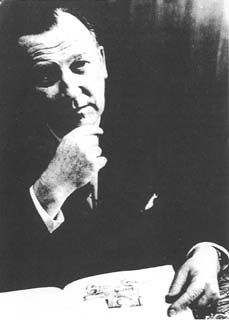
Athelstan Spilhaus: First U.S. Ambassador to UNESCO

In 1954, President Eisenhower named Athelstan Spilhaus to be the first U.S. ambassador to UNESCO, the United Nations Educational, Scientific and Cultural Organization. He received 64 out of 65 votes, including 5 from Soviet delegates, to become his country's first Government representative on UNESCO's Executive Board. He represented the United States on the Executive Board from 1954 to 1958.

Dr. Spilhaus was a most distinguished scientist and a man of great influence in the scientific community, and indeed with the public at large. He was prototypical of the leaders from America who participated in the development of UNESCO in its early years!

Dr. Athelstan Spilhaus was listed in "American Men of Science" as a meteorologist and an oceanographer, and made contributions to cartography. He was the inventor of the bathythermograph, a divice to measure water temperatures in the deep ocean. That device contributed substantially to the success of sonar in WW II, and thus to America's victory in the war. He also developed balloons for meteorological and remote sensing applications.

Athelstan Frederick Spilhaus was born on Nov. 25, 1911, in Cape Town, South Africa. He graduated from the University of Cape Town in 1931, and soon afterward settled permanently in the United States, where he received a master's degree in science at the Massachusetts Institute of Technology. Years later, he returned to Cape Town for his doctorate, which he received in 1948. He became a citizen of the United States in 1946. He died at age 88 in 1998.

In 1955 Spilhaus began writing scripts for “Our New Age,” a science-based newspaper comic strip which ran until the early 1970s. At its peak, an estimated 12,000,000 people each week read his educational strip, which was syndicated in 93 Sunday newspapers.

He became a research assistant at M.I.T. in 1933 and then an assistant director at the Woods Hole Oceanographic Institute, he was named an assistant professor at New York University in 1937. There he started the meteorology and oceanographic department. From 1941 through 1945 he served in the United States Army, teaching meteorology and traveling in Europe and China, where he supervised a network of weather stations and met Mao Zedong. Dr. Spilhaus became director of research at New York University in 1946, but two years later moved to the Minnesota to become dean of its Institute of Technology. After leaving his UNESCO[related duties in 1958, he returned to the University of Minnesota, where he resumed his deanship and stayed until 1966. He then served as president of the Franklin Institute in Philadelphia until 1969. Later in his life he described himself, accurately, as a "retired genius."

During his last years Spilhaus and his third wife Kathleen became known as authorities on antique mechanical toys. At the last count his collection of toys numbered three thousand! His home in Virginia had been enlarged by the addition of several rooms to be able to display his collection properly. Just as with all his other activities, special conditions apply. None are battery-operated—all are spring-wound or obtain their energy from some mechanical source like gravity-operation or a flywheel.

His most enduring contribution may well have been the Sea Grant program which he initially proposed and helped to create. It was started in the 1960's and continues today. Hundreds of millions of dollars of federal funds and matching institutional funds have gone into a system—involving several hundred institutions—that focuses on the better use of our ocean environment. He also was Chairman of the Advisory Committee of the U. S. Dept. of Interior that planned the National Aquarium in Washington, D. C. He was a member of more than 20 scientific and other organizations, and was elected President of the American Association for the Advancement of Science.

Spilhaus developed the idea of using covered skyways and tunnels to connect buildings, protecting people in severe weather. That concept was put into use in Minneapolis in the 1950s, when he was dean of the University of Minnesota Institute of Technology. He was also the inventor of the Spilhaus Space Clock which was manufactured by Edmund Scientific; today they are collectors items!

Dr. Spilhaus lead the creation of the U.S. science exhibit at the 1962 Seattle World Fair, which remains as the Pacific Science Center. President Johnson appointed him to the National Science Board for the term 1966–72. Spilhaus also served as chairman of the scientific advisory committee of the American Newspaper Publishers Association.

Among his many honors, which included twelve honorary degrees, is the Legion of Merit awarded in 1946. The latter was in recognition of his wartime research, in addition to the bathythermograph, which contributed to and introduced into the battle zone radar and radio upper wind finding, spherics, and meteorological instruments for measurements from aircraft in flight. He was later (1951) director of weapons effects for Nevada atomic tests. For this and other contributions he was awarded the Exceptional Civil Service Medal, by the United States Air Force in 1952.

Dr. Althelstan Spilhaus is but one of many distinguished Americans who participated in UNESCO during its formative years. All Americans owe him and his fellow pioneers a dept of gratitude for that service.

July 29, 1955. Announcement of plans for the building and launching of the world's first man-made satellite. The then Presidential press secretary James Hagerty is shown with five scientists during the meeting at which announcement of President Eisenhower's approval of the plan was made. Dr. Athelstan Spilhaus is standing at the back on the right.

Sunday, April 29, 2007

The U.S. National Commission for UNESCO

The United Nations Educational, Scientific, and Cultural Organization is unique among the United Nations Organizations in that its charter specifically calls for the creation of a National Commission in each member state. The U.S. National Commission was originally created in 1946, and among its 100 members were such distinguished individuals as
  • Archibald MacLeish, Pulitzer Prise winning poet and playwright and former Librarian of Congress,
  • William Benton, an Assistant Secretary of State, who had previously founded the famous advertising agency Benton and Bowles, and who later served as U.S. Senator and left us the Benton Foundation.
  • Milton Eisenhower, the brother of President Eisenhower, himself the first chair of the National Commission, president of Kansas State College, and later president of Johns Hopkins University.
The original membership included the presidents of eleven colleges and universities, senior officials of the National Education Association, the American Federation of Labor and the Congress of Industrial Organizations, industrial organizations, and many others. As Benton said at the first UNESCO General Conference, that original National Commission was:
a body unique in American history. It unites in one assembly, spokesmen of the arts, sciences and learned professions; of the education system at all levels; of radio, motion pictures and the press; of the education interests of labor, agriculture and of religious bodies; and of many other American groups that are now working for the establishment of peace.
We are fortunate enough to have a fine reference to the early years of the National Commission in Howard E. Wilson's book, United States National Commission for UNESCO. While long out of print, one can occasionally find a copy on the used book market. Wilson was the Deputy Executive Secretary of the Preparatory Commission for UNESCO, a member of the National Commission, and a member of the U.S. delegation to the UNESCO General Conference in Mexico City.

The book makes it plane that the National Commission was deliberately designed so that the majority of the member were to be chosen by civil society organizations, not the Department of State. Moreover, the National Commission would itself determine those civil society organizations privileged to name members, once it had been established. While the Department was required by law to consult with the National Commission, the National Commission also had a direct and very close relationship with UNESCO. American members of UNESCO's Executive Board (who at the time served in their personal capacity, elected by the General Conference rather than as government officials) kept the members of the National Commission informed as to the work of the organization and of upcoming matters before the Board.

That original National Commission was very active. It had a committee working on developing public opinion concerning UNESCO. It had been asked to review textbooks for content. Meetings were held not once per year, the minimum required by law, but several times per year. Secretary of State George Marshall spoke at its first meeting. Its first national conference, held in Philadelphia in 1947, was attended by representatives of more than 500 organizations.

Today's National Commission, created anew with the return of the United States to membership in UNESCO, is a pale reflection of that early body. (Read the most recent annual report on the National Commission.) According to the Charter for the National Commission for UNESCO, published by the Department of State:
The purpose of the U.S. National Commission for UNESCO shall be to serve the Department of State in an advisory capacity with respect to the consideration of issues related to education, science, communications culture, and the formulation and implementation of U.S. policy towards UNESCO.
The authorizing legislation for the National Council for UNESCO (as it is termed in the law, Annex I) is much broader, stating:
In fulfillment of article VII of the constitution of the Organization, the Secretary of State shall cause to be organized a National Commission on Educational, Scientific, and Cultural Corporation (FOOTNOTE 1) of not to exceed one hundred members. (Emphasis added.)
The UNESCO article in question (Annex II) states:
National Commissions or national co-operating bodies, where they exist, shall act in an advisory capacity to their respective delegations to the General Conference and to their Governments in matters relating to the Organization and shall function as agencies of liaison in all matters of interest to it. (Emphasis added.)
Thus, by law and past custom, the National Commission is intended to have not only an advisory function, but also to provide liaison with UNESCO, to link educational, scientific and cultural organizations in the United States with UNESCO, and to build public support for UNESCO.

The restricted scope appears to have been in part a result of a misreading of the Federal Advisory Committee Act (FACA). That act serves an important function, assuring that advice to the government is both objective and open to the public. FACA not only formalized a process for establishing, operating, overseeing, and terminating government advisory bodies, but also created the Committee Management Secretariat (MCC), to monitor and report executive branch compliance with the Act. FACA requires that advisory committees be rechartered periodically, and allows for the President to grant waivers from standard provisions of the Act for specific advisory committees when appropriate.

It certainly appears appropriate in the case of the U.S. National Commission for UNESCO, which has functions defined by previous legislation, and by the constitution of UNESCO which the United States accepted on rejoining the organization. If an appropriate waiver the next time its charter is renewed, the U.S. National Commission for UNESCO could serve this nation as its counterparts in the United Kingdom and Canada serve theirs.

Let us hope in the future the National Commission will once again merit the description once provided by Milton Eisenhower as:
a legal body made up of private citizens. It advises government officials and conference delegates who are governmentally appointed and governmentally responsible, but it retains the right to speak its mind publicly on all issues before it. It marshals the educational, scientific and cultural forces of this country for service in both governmental and private channels, and often does not bother to define which is which.


Click here to return to the Americans for UNESCO homepage.

Click here to go to the archive of Americans for UNESCO website Highlights.


TITLE 22 - FOREIGN RELATIONS AND INTERCOURSE
CHAPTER 7 - INTERNATIONAL BUREAUS, CONGRESSES, ETC.
SUBCHAPTER XVII - UNITED NATIONS EDUCATIONAL, SCIENTIFIC, AND
CULTURAL ORGANIZATION

-HEAD-
Sec. 287o. National Commission on Educational, Scientific, and Cultural Cooperation; membership; meetings; expenses

-STATUTE-
In fulfillment of article VII of the constitution of the Organization, the Secretary of State shall cause to be organized a National Commission on Educational, Scientific, and Cultural Corporation (FOOTNOTE 1) of not to exceed one hundred members. Such Commission shall be appointed by the Secretary of State and shall consist of (a) not more than sixty representatives of principal national, voluntary organizations interested in educational, scientific, and cultural matters; and (b) not more than forty outstanding persons selected by the Secretary of State, including not more than ten persons holding office under or employed by the Government of the United States, not more than fifteen representatives of the educational, scientific, and cultural interests of State and local governments, and not more than fifteen persons chosen at large. The Secretary of State is authorized to name in the first instance fifty of the principal national voluntary organizations, each of which shall be invited to designate one representative for appointment to the National Commission. Thereafter, the National Commission shall periodically review and, if deemed advisable, revise the list of such organizations designating representatives in order to achieve a desirable rotation among organizations represented. To constitute the initial Commission, one-third of the members shall be appointed to serve for a term of one year, one-third for a term of two years, and one-third or the remainder thereof for a term of three years; from thence on following, all members shall be appointed for a term of three years each, but no member shall serve more than two consecutive terms. The National Commission shall meet at least once annually. The National Commission shall designate from among its members an executive committee, and may designate such other committees as may prove necessary, to consult with the Department of State and to perform such other functions as the National Commission shall delegate to them. No member of the National Commission shall be allowed any salary or other compensation for services: Provided, however, That he may be paid transportation and other expenses as authorized by section 5703 of title 5. The Department of State is authorized to provide the necessary secretariat for the Commission.
(FOOTNOTE 1) So in original. Probably should be
''Cooperation''.

-SOURCE-
(July 30, 1946, ch. 700, Sec. 3, 60 Stat. 713; Pub. L. 87-139, Sec.
9, Aug. 14, 1961, 75 Stat. 341.)

Annex II
Relevant Section of
The Charter of UNESCO

ARTICLE VII.


NATIONAL CO-OPERATING BODIES


1. Each Member State shall make such arrangements as suit its particular conditions for the purpose of associating its principal bodies interested in educational, scientific and cultural matters with the work of the Organisation, preferably by the formation of a National Commission broadly representative of the Government and such bodies.

2. National Commissions or national co-operating bodies, where they exist, shall act in an advisory capacity to their respective delegations to the General Conference and to their Governments in matters relating to the Organisation and shall function as agencies
of liaison in all matters of interest to it.

3. The Organisation may, on the request of a Member State delegate, either temporarily or permanently, a member of its Secretariat to serve on the National Commission of that State, in order to assist in the development of its work.

Wednesday, March 28, 2007

From model, to colleague, to friend: Honoring the memory of Albert V. Baez (1913 – 2007 )


Albert Baez stood as a model of meaningful service at three critical times in my life. The first was in 1954 when, having completed my post doctorate at Harvard, I was determined to find a liberal arts college where I could both teach and have students join me in research. When a Research Corporation representative told me about an Albert Baez who was demonstrating this very practice as a physicist at the University of Redlands in California, I applied for and obtained a position there in the chemistry department. I have deeply satisfying memories of those years at Redlands where both Albert Baez and I combined teaching in our respective disciplines with working with undergraduates as research associates.

In 1963, Albert Baez once again proved to be an influential model to me, calling me, not from his laboratory in Redlands, but from Paris, France, and inviting me to come join him as a member of his team at the United Nations Educational, Scientific and Cultural Organization (UNESCO). He had gone to UNESCO a year earlier to set up an international science education program. He envisioned taking improved content and methods of teaching science to beleaguered teachers in developing countries. Al’s vision resonated with me, for as with many other professionals of that era, I was influenced by John F. Kennedy’s statement: “Ask not what your country can do for you, but ask what you can do for your country.” When my wife agreed to take five children with us and set up home in Paris, I accepted Al’s invitation and became the chemistry specialist on his team. My part was to plan and administer the UNESCO Pilot Project for Chemistry Teaching, which was implemented in 12 countries on Asia.

The third time I found Albert Baez a model occurred in 1987. After 20-years of service with UNESCO (12 in Paris and 8 in Nairobi, Kenya) and almost a decade as a consultant with the World Bank in Washington, I was open to various options for retirement. Al’s own retirement experience in heading up Vivamos Mejor, a nonprofit organization he founded to serve Mexican families in his native region of Mexico may well have influenced me to accept the invitation from Glenn Seaborg, the Noble Laureate, to serve as Executive Director of a nonprofit organization he had helped found, the International Organization for Chemical Sciences in Development (IOCD).

I recall with warm feeling the collegiality of my days with Al at the University of Redlands, both of us dedicated to working with students as research associates. Al and I frequently took part in faculty discussions defending undergraduate research. His mature articulation of the case for this hybrid role we were both pursuing proved helpful to me as a relatively junior member of the faculty. Through this association with Al, I came to understand the critical contribution this innovative teaching practice could have in the education of scientists and became a champion for this teaching practice in American colleges through membership in committees of the American Chemical Society.

During that Redlands period, Al and I were both involved in the national curriculum reform projects funded by the National Science Foundation, Al in the Physical Science Study Committee (PSSC), and I in the Chemical Bond Approach (CBA). This brought us both into working contact with science teachers from secondary schools. I am almost certain that it was Al’s prominence as a creative developer of instructional films for the PSSC project that brought him to the attention of the leadership of UNESCO in Paris. Frequent visits to the Baez home enabled me to witness Al’s passion for using optical and electronic instruments as teaching aids. His house was filled with every variety and model of film projector, slide projector, overhead projector, camera, tape recorder, etc. Al brought great originality to applying his specialization in the physics of light (optics) to his lectures and talks to student groups.

Al and his wife Joan welcomed my wife and me as family. We stayed in their home many times through the years and shared family concerns with them. Al and Joan were members of the Society of Friends and we often accompanied them to the quiet services at the local Friends Meeting House. We will greatly miss Al. I particularly acknowledge that knowing Albert Baez enriched my understanding of science and gave me opportunity to live a life of service and meaning.

Robert H. Maybury

Read more about Al Baez, the first director of science education at UNESCO.

Editors note: Bob Maybury served as a member of the Board of Directors of Americans for UNESCO for a number of years, and continues to have a close relationship to the organization. He is a distinguished chemist, the Executive Director of the International Organization for Chemical Sciences in Development, and an expert in science education. JAD

Tuesday, March 13, 2007

UNESCO History and Program References

A set of links has been created on del.icio.us, a social bookmarking site, with links to UNESCO. For those interested in the history of UNESCO or how it operates, these references should prove invaluable.

To access the materials click on the link below:


Most linked publications are online, but some books that can not be downloaded are linked to booksellers. Even out-of-print books are now often available in the online used book market. There are also websites that seemed likely to be of special interest to the students.

One advantage of the online system is that it can be searched. Each entry also tells you how many other people have linked to that resource in their social bookmarking sites. Those of you who use del.icio.us should be able to easily transfer links from the site to you personal collection.

There are also "tags". If you click on one of the tags to the right of the del.icio,us list, you will get a reduced list that contains all those tagged with that term. It is possible to combine tags so that, for example, you can obtain a list of resources on the history of UNESCO that are available online.

Sunday, December 31, 2006

UNESCO's International Conventions

UNESCO's Director General at the 50th Anniversary Celebration of the Hague Convention for the Protection of Cultural Property in the Event of Armed Conflict

"International Conventions" are considered by the United Nations to be formal multilateral treaties. They are distinguished from other treaties in that they typically involve many parties. UNESCO has established and is responsible for 28 of these legal instruments. UNESCO's Conventions are subject to ratification, acceptance or accession by UNESCO Member States. The United States has ratified many of the UNESCO Conventions mentioned in the following paragraphs. It has not ratified others such as many of the regional Conventions for the recognition of studies, diplomas and degrees and those that currently remain under consideration.

Of course, many other multilateral organizations are responsible for international conventions; for example, the International Committee for the Red Cross is for the Geneva Conventions. UNESCO participates actively in some of the conventions run by other organizations. Thus, UNESCO's biosphere reserves and World Heritage sites have provided a focus for several different types of co-operative links between UNESCO and the Convention on Biological Diversity, that was developed for the 1992 Rio Earth Summit.

Two new conventions have been recently ratified by the requisite numbers of States, and are to come into force early in the new year:
* The Convention on the Protection and Promotion of the Diversity of Cultural Expressions will enter into force on 18 March 2007, and
* The International Convention against Doping in Sport will enter into force on 1 February 2007.
International Conventions set regulatory standards among nations. The drafting and preparation of a UNESCO Convention are carefully regulated under the terms of the UNESCO constitution (Article IV, paragraph 4). A preliminary study of the technical and legal aspects of the question to be addressed is prepared and submitted for consideration to the Executive Board and subsequently for adoption by the General Conference. The Convention itself specifies how many nations must ratify before it comes into force. UNESCO is usually appointed as the depositary for such instruments.

Intellectual Property Rights

For many years, the UNESCO Conventions most important to American economic interests were those which protected intellectual property rights. The Universal Copyright Convention was approved in 1952 and revised in 1971. Under the Copyright Convention “each Contracting State undertakes to provide for the adequate and effective, protection of the rights of authors and other copyright proprietors in literary, scientific and artistic works, including writings, musical, dramatic and cinematographic works, and paintings, engravings and sculpture.” The International Convention for the Protection of Performers, Producers of Phonograms and Broadcasting Organizations was added in 1961 and the Convention for the Protection of Producers of Phonograms against Unauthorized Duplication of their Phonograms added in 1971. A further Convention relating to the Distribution of Program-Carrying Signals Transmitted by Satellite was added to the portfolio in 1974, as was the Multilateral Convention for the Avoidance of Double Taxation of Copyright Royalties in 1979.

These conventions were preceded on the global scene by the Berne Convention for the Protection of Literary and Artistic Works (1886) and the Paris Convention for the Protection of Industrial Property (1883), both administered by the World Intellectual Property Organization. However, the United States only acceded to the Berne Convention in 1988, obtaining a alternate source of protection for many but not all of the rights provided under the UNESCO instruments.

More recently, the Trade Related Intellectual Property Rights Agreements implemented by the World Trade Organization have been added to the international scene. Still, UNESCO and UNESCO administered IPR Conventions remain quite important within this larger network of international treaties and organizations.

The United States movie, television, recording and publishing industries are all protected against piracy by these conventions. According to the UNESCO Institute of Statistics, which is the repository of global statistics on cultural industries. The global market value of cultural and creative industries is an estimated $1.3 trillion and is rapidly expanding. International trade in cultural goods was an estimated $60 billion in 2002, and U.S. exports of these goods was $7.2 billion. These are industries with substantial income from foreign sales, and substantial employment in the United States based on those foreign sales. American creative communities protected by these Conventions are important not only commercially, but central to our culture. They make us friends around the world.

Education


Educational Conventions go back to the earliest years of UNESCO's existence with the 1948 Agreement For Facilitating the International Circulation of Visual and Auditory Materials of an Educational, Scientific and Cultural Character. More recently UNESCO has been entrusted with a number of Conventions that encourage the international exchanges of university students by ensuring comparability of educational credentials. These Conventions often have the effect of helping to strengthen educational systems in the signatory nations. These Conventions include:
* The (Lisbon) Convention on the Recognition of Qualifications concerning Higher Education in the European Region (1997)
* The (Paris) Convention on Technical and Vocational Education (1989)
* The Regional Convention on the Recognition of Studies, Diplomas and Degrees in Higher Education in Asia and the Pacific (1983)
* The Regional Convention on the Recognition of Studies, Certificates, Diplomas, Degrees and other Academic Qualifications in Higher Education in the African States (1981)
* The Convention on the Recognition of Studies, Diplomas and Degrees concerning Higher Education in the States belonging to the Europe Region (1979)
* The Convention on the Recognition of Studies, Diplomas and Degrees in Higher Education in the Arab States (1978)
* The International Convention on the Recognition of Studies, Diplomas and Degrees in Higher Education in the Arab and European States Bordering on the Mediterranean (1976) and
* The Regional Convention on the Recognition of Studies, Diplomas and Degrees in Higher Education in Latin America and the Caribbean (1974)
Two further Conventions seek to prevent discrimination in education:
* The Convention against Discrimination in Education (1960), and
* The Protocol Instituting a Conciliation and Good offices Commission to be Responsible for Seeking the settlement of any Disputes which may Arise between States Parties to the Convention against Discrimination in Education (1962)
Globally, about two percent of all higher education students are studying abroad, according to UNESCO statistics. That percentage increases markedly in Africa (nearly six percent) and Central Asia (nearly four percent) where international training is an important element of efforts to strengthen the university systems. United States' tertiary education institutions in 2005-6 enrolled 564,766 international students. The foreign students in American universities enrich the educational experience for all, and many remain in the United States and continue to contribute to our nation. More generally, this international exchange of students, enhanced through UNESCO's efforts, is helping to build understanding among peoples of the world, and to strengthen the societies and economies in poor nations.

Cultural and Natural Heritage

The Convention concerning the Protection of the World Cultural and Natural Heritage is very well known because it is the basis for UNESCO's World Heritage Program. The Convention was created in 1972 as a result of a U.S. initiative, and there are currently 644 cultural, 162 natural and 24 mixed world heritage sites in the 138 nations that are Parties to the Convention.

There are however, a number of important other UNESCO Conventions that regulate the care and international cooperation for the protection of our heritage, including:
* The Convention for the Safeguarding of the Intangible Cultural Heritage (2003)
* The Convention on the Protection of the Underwater Cultural Heritage (2001)
* The Convention on Wetlands of International Importance especially as Waterfowl Habitat (1971)
* The Convention on the Means of Prohibiting and Preventing the Illicit Import, Export and Transfer of Ownership of Cultural Property (1970) and
* The Convention for the Protection of Cultural Property in the Event of Armed Conflict (1954)
These conventions have been especially important in recent years in Iraq and Afghanistan, and in the aftermath of the Israeli occupation of part of Lebanon.

Final Comments

International Conventions are but one form of the standard setting instruments used by UNESCO. There are also Recommendations adopted by the General Conference and Declarations adopted by the General Conference of UNESCO. The implementation of these standard setting instruments is an important UNESCO function, providing it with significant tools to accomplish its objectives. The creation and management of such instruments, however, also imposes a significant administrative burden on the organization, and some have suggested that UNESCO step back from the creation of new instruments to focus its efforts on the better management and utilization of the existing set.

Under the American democratic system, Congress plays a key role in the ratification of treaties brought to it by the Executive Branch of government. The State Department plays the lead role for the United States in the negotiation of international conventions and other standard setting instruments, and in helping to assure that the multilateral system works to enforce these agreements. Civil society organizations, especially those representing the educational, scientific, cultural and media sectors, play a key advisory role through the U.S. National Commission for UNESCO.

Our diplomats especially deserve our thanks and support for their relatively unsung efforts on our behalf in this complex and important arena!

Monday, December 18, 2006

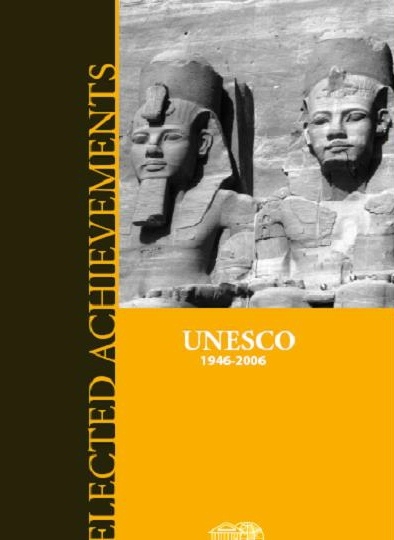
UNESCO 1946-2006: SELECTED ACHIEVEMENTS

UNESCO was designed “to contribute to peace and security by promoting collaboration among the nations through education, science, and culture.” It has accomplished a great deal since it was founded in the aftermath of World War II.

Americans for UNESCO (AU), on UNESCO’s sixtieth anniversary, set itself the task of providing an overview of what UNESCO has accomplished. Following up an initiative launched by its predecessor, Americans for the Universality of UNESCO, AU reached out to some 20 specialists in UNESCO’s fields of competence, seeking to highlight some of its achievements over the years. The UNESCO involvement of some of these experts dates as far back as the 1940s, and their collective experience amounts to over 350 years. The inquiry came to an end in the summer of 2006.

This brief document resulted from a screening of the reports of these wise people by members AU’s Board and Advisory Council. The reported accomplishments are representative, not exhaustive. The brochure identifies significant contributions to the advancement of knowledge and understanding among peoples which can be attributed to UNESCO since its founding.

Sunday, October 29, 2006

Remembering Jack Fobes


On June 17th, 2005, Americans for UNESCO and the Board on International Scientific Organizations of The National Academies held a celebration of the life of John E. Fobes. Special guests for the event were Federico Mayor Zaragoza (Former Director-General of UNESCO), Harriet M. Fulbright and Harlan Cleveland. The website of Americans for UNESCO was not working when Dr. Fobes died, but we are now taking this opportunity to commemorate his life and his contributions.

John Edwin Fobes died at his home at the age of 86 on Jan. 20, 2005. A distinguished diplomat, he served as Deputy Director-General of UNESCO, the organization's chief operating officer, from 1971 to 1977, and as Chair of the U.S. National Commission for UNESCO on his return from Paris. When the United States withdrew from UNESCO, Jack Fobes immediately founded Americans for the Universality of UNESCO (which subsequently became Americans for UNESCO). From 1985-2002, he headed AUU; through the organization's network and its Newsletter, he virtually single-handedly kept the idea of UNESCO alive in the American mind. In 2002, he assumed the Chair of the Advisory Council of Americans for UNESCO.
He was widely known as a model of global engagement and solidarity. Whether as a United States diplomat or UNESCO official, he was unstintingly dedicated to the cause of peace, human dignity and international understanding. He played an important role in the establishment of the United Nations, and remained an energetic promoter and defender of the Organization’s Charter and global mission. I understand that even shortly before his death, he took the floor at a public meeting to make an impassioned statement in support of the UN’s ideals. Such deeply held commitment was clearly why so many younger people found in him a mentor and teacher, and why his legacy is sure to be felt by future generations.
Kofi Annan
Secretary General of the United Nations
in a letter of condolence to Hazel Fobes

Excerpts from the Remarks of Federico Mayor

The equal dignity of all the human beings...

They are our commitment, they are our permanent "raison d'être"
...
· 50,000 of our brothers and sisters die of hunger every day. We cannot forget it – we have a duty of memory.
· It is this feeling that allows us to dare. "Dare to care" was one of the expressions I took from Jack Fobes in 1988 – dare to share... and to care!


Dear friends, Dear Hazel, family:

I have an immense debt of gratitude to Jack Fobes. He was very helpful, inspiring...

I share your profound grief at the loss of our beloved friend.

------

Jack is my friend. He is not physically present anymore, but he remains present in my everyday life as one who had an important part in forging our attitudes. temper, behavior... As I wrote in a poem to Melina Mercouri: '"The stars lead us long after they have gone dark". Jack was and will ever be a star leading me on my way...

· Jack, a man of vision.
In the watch tower, because what matters is future... to ensure a brighter future to our children..
.
The succeeding generations: they were the every-day essential thought of Jack Fobes. They deserve to freely write their own future, and we cannot in social, economic, environmental, cultural and ethical terms leave them a legacy of muscle, insolidarity, fear, disorder, confusion, injustice...

He was a great American – he loved his country and its principles – but he was more: he was a world citizen and he had all human beings in his eyes when looking for better sharing, for better care... yes, above all, better sharing! Dare to share! Time, goods, funds, knowledge – sharing better, we can avoid frustration, radicalization, violence, aggression; sharing and listening, we can place the word, the dialog, conciliation where today we have confrontation, the sword, the force...

------

From a speech of Robert Kennedy, I quote: "This world demands the qualities of youth: not a time of life but a state of mind, a temper of the will, a quality of imagination, a predominance of courage over timidity, of the appetite for adventure over the love of ease."...

Listen to the young people – to work for them is not enough, we must work with them!

The future generations, always in the mind of Jack Fobes: "Education for all... It's time for action"...

------

Life is a mystery. Death is a mystery too. Every single human being is unique, is able to create, to invent.

Jack Fobes: you left, you remain in our mind. You have now immense wings for the endless space. And infinite time. We are still here trying to act as you wanted, in a constant search, with faith and resolve. And freedom. And knowing that if there is no wind, we must row.

"Never gloat" was his motto; he never sought nor accepted glory. I remember his reluctance when UNESCO awarded to him the Nehru Gold Medal. Now, I understand Jack's grace: now, only now, he is with a force so strong he must accept his glory. Jack, I truly believe, “has gone to Glory”.


John E. Fobes The Man
A presentation by Richard Nobbe

On The Occasion of The June 17, 2005 Memorial Service


Much has been written and said about John E. Fobes the scholar, diplomat, international civil servant, visionary - and unabashedly pro-UN activist. But who was Jack Fobes the Man?

I don't profess to have mastered the subject because the truth of the matter is Jack was a very private and complex person. But what I have done is to assemble a collage of images based on anecdotal remembrances which will provide you a glimpse into his character.

His wife Hazel tells me he was raised by a protective mother and a prudish intellectual maiden aunt on his mother's side and by two aunts on his father's side (the wealthier side of the family) who inculcated in him a love of archaeology and geography.

Jack was a train buff. As a youth, he used to slip away to visit the train yards to study and master the number wheels that gave a locomotive its name. He also had a valuable collection of "Lionel" trains with belching vapor, blinking lights, and piercing whistles. His first job upon graduating cum laude from college was as Director of Train Tours through the Canadian Rockies down the west coast into Mexico. In fact, it was on one of those trips that he met his wife Hazel. According to her, it was an instant whirlwind romance, love at first sight, ever constant, ever true. Today, as we commemorate Jack's life, the rear bumper tag on his car still reads, "I'd rather be riding a train." Toot! Toot!

Jack was an ardent lover of classical music. He could identity compositions and composers by listening to the music. As a youth. he participated regularly in meetings of musical groups established throughout the country by the late Leonard Bernstein to foster appreciation on the subject. And he won several prizes.

Jack professed not to be interested in sports. He was in fact a great athlete and excelled in track and swimming, having served as captain of the varsity swimming team at Northwestern University. His daughter informs me she is alive because of his prowess in swimming. During his assignment to India, the family went to the ocean one day and she got caught up m a riptide which carried her out to sea. Sensing danger, Jack raced to the water's edge, hurtled the waves, and rescued her.

Jack never mentioned his military experience, but he was drafted by the air force and rose to the eminent position of Lieutenant Major. He was a spotter, his job being to identify key targets and installations behind enemy lines for destruction and elimination. Hazel tells me she did not see him for three years and that this experience completely changed his personality.

Although not well known, Jack was an amateur biblical scholar. In his spare time, he would regularly read the Old and New testaments and could quote scripture by memory and at random.

Rank and privilege were not the same for lack. Rank mean) the acceptance of responsibility and the execution of authority. As for privileges, he did not believe in them. For example, with few exceptions, he traveled air coach on all his foreign missions for UNESCO, although he was entitled to first class. As an extension of this philosophy, he practiced an open-door policy during his 14 years as the top administrator and subsequently Deputy-Director general for UNESCO during which the staff regardless of rank could visit him about personal and professional matters- He is still regarded today by those who remember him, especially by those whom he fondly called "the little staff people" (telephone operators, machinists, drivers, workers etc.) as the quintessential American of good heart, faith, and fairness.

Jack was especially fond and laudatory of people who, like him, felt passionate about their advocacy. Such was the case of the late Barbara Good (a former National Commission staff member) who prepared in the mid-1970s a blockbuster resolution on the promotion of women which required three weeks of advance preparation. Upon adoption by acclamation, Jack left the podium to congratulate Barbara with a handshake and a hug. Shortly thereafter, overcome by joy, emotion, and a sense of fulfillment, she fainted and had to be wheeled off to the UNESCO nursery under Jack's watchful eye.

Another of Jack's great passions was his belief that the wives of senior-ranking UNESCO officials should play a major role in promoting the well-being of the UNESCO family, especially members of delegations from third-world countries. Many of these women found themselves in a large hustling city for the first time. Some had never seen tall buildings or elevators before. And many knew nothing about French customs, practices, idiosyncrasies. And so was born the UNESCO Community Service, coordinated and strengthened by Hazel Fobes. Among its many accomplishments was the publication of a well received booklet by the French media entitled "Practically Yours, Paris and France" (unfortunately now out of print) which greatly contributed to the enrichment of the lives of members of foreign delegations and international civil servants as well. Had it not been for Jack's strong support, the protect might have failed for lack of funding.

Unbeknownst to many, Jack was a prankster extraordinaire. Let me add one other to those mentioned by Dr. Arndt. On Earth Day, which was never officially recognized by UNESCO, Jack asked his personal assistant to go to the market and purchase hundreds of the biggest, juiciest, and reddest radishes she could find and place them on silver trays in the main lobby. His entire staff was then ushered in only to be met by Jack who gave them an up-beat sermonette about Earth Day. Needless to say, the environmental community was thrilled but what amused Jack was how rapidly the radishes disappeared. Anyone who has partaken of this treat will understand what I mean.

In conclusion. what all this suggests to me, ladies and gentlemen, is that Jack, behind that intellectual facade, scholarly mien, and sometimes stern countenance, was at heart a fun-loving guy with bouts of fantasy and whimsicality, a good sense of humor, a sentimentalist who cared deeply about this family and the human race and who, on occasion, liked to let his hair down and engage in self-deprecation and introspection about the frailties of the human condition. Indeed, he was happiest and at peace with himself when dedicating his life to promoting the causes of humanity.

And so, Jack, on behalf of those present, especially those of Americans for UNESCO, we wish you God speed. You were truly a great person and a source of inspiration to many of us. Thank you.


Biographical Details

Born and raised in Chicago, John Edwin Fobes graduated cum laude from Northwestern University in 1939, and received his M.S. from Fletcher School of Law and Diplomacy, Tufts University. He served in the U.S. Army Air Corps from 1942-1946, rising from private to major. After the war, he served in the Secretariat to the United Nations from 1945-1946, during its organizational stages. As a U.S. civil servant in the Bureau of the Budget from 1946-1951, he addressed issues arising from increased multilateral activity immediately following World War II.

He moved to Paris with his family in 1952, where he served for three years as Attaché to the U.S. Delegation to NATO and OEEC, helping to administer the Marshall Plan. On return, he was named director of the State Department's Office of International Administration.

In 1960. the family moved to New Delhi, India, where Dr. Fobes served as assistant director, then deputy director, of the U.S. Mission to India, the largest U.S. foreign-aid program at the time. His ambassador was John Kenneth Galbraith.

In 1964, he returned to Pans, to join UNESCO, the Untied Nations Education, Scientific and Cultural Organization, as Assistant Director-General for Administration. In 1971, he was appointed Deputy Director-General, the organization's chief operating officer, where until his retirement in 1977 he served under two directors: France's René Maheu and Senegal's Amadou Mahtar M'Bow.

Renaming to the U.S., he was named m the US National Commission for UNESCO and elected chairman by the 100-member body. Meanwhile he was working with like-minded colleagues to found the Club of Rome, in which he retained membership from 1978 to 2000.

When the Reagan Administration made its decision to withdraw from UNESCO, Fobes immediately resigned his chairmanship of the U.S. National Commission and retired to Asheville, NC. There he founded Americans for the Universality of UNESCO, an organization of UNESCO-experienced Americans intent upon persuading the U.S. to re-enter the multilateral organization; he kept it alive on family funds, and later with some help from the MacArthur Foundation, for the two decades of U.S. absence from UNESCO. From 1985-2002, he headed AUU; through the organization's network and its Newsletter, he virtually single-handedly kept the idea of UNESCO alive in the American mind. When the U.S. announced re-entry in the Fall of 2002, he passed the leadership of AUU to the next generation, retaining a role as Founder President Emeritus and Chair of its Advisory Council; AUU took a new post re-entry name, Americans for UNESCO (AU), and moved to Washington DC. He was also president of the Western North Carolina Chapter of the United Nations Association and participated vigorously in its programs until the eve of his death.

His honors include: Doctor of humanities (honoris causa), Bucknell University, 1973; the UNESCO Silver Medal for Service, 1983; the UNESCO Nehru Gold Medal in 1992, in recognition of "profound commitment to the Organization and outstanding contribution to the achievement of its goals"; and election as Fellow of the World Academy of Arts and Sciences in 1992.

John Edwin Fobes died at his home at the age of 86 on Jan. 20, 2005. His survivors include his citizen-activist wife of 64 years, Hazel Weaver Fobes; a daughter, Patricia Sanson, of Maryville, TN; a son Jeff Fobes, publisher of the Asheville Mountain Express; three granddaughters; and five great grandchildren.

Read the Tributes to John Fobes by Koïchiro Matsuura and Paul Schafer
Read the Jack Fobes: Lien-Link Memorial Articles by Richard Arndt and Gérard Bolla.