Showing posts with label Americans at UNESCO. Show all posts

Saturday, February 22, 2014

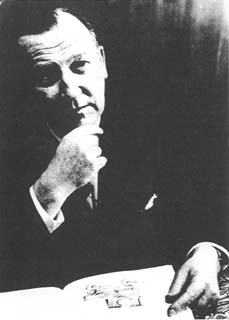
Howland H. Sargeant and Myrna Loy

Howland H. Sargeant is the only American ever to have served as President of the UNESCO General Conference. He did so in 1951 at the GC meeting in Paris. At the time he was serving as Deputy Assistant Secretary of State for Public Affairs.

He was also on his honeymoon at the time, having recently married actress Mryna Loy, who he met through the U.S. National Commission for UNESCO. It is fun to consider the impact the she would have had on the people attending the General Conference. Here is how Lauren Bacall described Loy:
How many women do we know who were continually kissed by Clark Gable, William Powell, Cary Grant, Spencer Tracy and Fredric March? Only one: Myrna Loy... And to meet whom did Franklin D. Roosevelt find himself tempted to call off the Yalta Conference? Myrna Loy. And to see what lady in what picture did John Dillinger risk coming out of hiding to meet his bullet-ridden death in an alley in Chicago? Myrna Loy, in Manhattan Melodrama.
According to the International Movie Data Base:
Some of her biggest fans included Jimmy Stewart, Winston Churchill, and the Roosevelts. FDR invited to the White House early on in his administration, and she became very friendly with First Lady Eleanor Roosevelt.
Sargeant, a Rhodes Scholar, was a career diplomat. In 1947, he had became Deputy Assistant Secretary of State for Public Affairs In this capacity, he was a member of the United States delegation to UNESCO and in 1950 was Vice-President of the UNESCO General Conference that met in Florence. In 1952 he was appointed Assistant Secretary of State for Public Affairs, serving in that position for nearly a year.

The American Committee for the Liberation of the Peoples of Russia founded Radio Liberty in 1954, and Sargeant became Radio Liberty's first president. He held this position until 1975. (Radio Liberty merged with Radio Free Europe in 1976.) He died in 1984.

Myrna Loy was herself very active in supporting UNESCO. She became the first Hollywood star to be appointed a member of the U.S. National Commission for UNESCO in 1948 and in the 1950s served as Chair of the Hollywood Committee for UNESCO. Between 1949 and 1954 she served as a film advisor for UNESCO. She also made radio broadcasts supporting UNESCO.

Loy is today best known for her role as Nora Charles in six "Thin Man" movies made between 1934 and 1947. (My childhood neighbor and friend, Dean Stockwell, played her son in the last of these, Song of the Thin Man.) Ultimately, she made 129 movies, and acted in television, radio and the stage as well.

According to Wikipedia:
With the outbreak of World War II, Loy all but abandoned her acting career to focus on the war effort and work closely with the Red Cross. She was so fiercely outspoken against Adolf Hitler that her name appeared on his blacklist. She helped run a Naval Auxiliary Canteen and toured frequently to raise funds.
Late in her life she received an honorary Academy Award and a Kennedy Center Lifetime Achievement Award. She was named Queen of the Movies in a nation-wide poll of moviegoers in 1936

She and Howland Sargeant were divorced in 1960. She continued acting until well into her 70s, and died in 1993.

Saturday, January 18, 2014

Tomas Malone: A Friend of UNESCO

Thomas F. Malone, an influential voice in the expansion of meteorological research and education during the second half of the 20th Century, and insightful commentator on the human future, died of natural causes at his home in West Hartford, Connecticut, USA on July 6, 2013. Among his many honors, he was the second person to be awarded the American Association for the Advancement of Science Award for Science and Diplomacy.

Dr. Malone was the Chairman of the U.S. National Commission for UNESCO from 1965 to 1967.  He was involved in a number of UNESCO activities in that and other roles.

He was a meteorologist of distinction, who served as president of both the American Meteorological Society and the American Geophysical Union. He led in the creation of an international scientific network focusing on weather and climate, and was one of the first scientists to raise public concern for climate change.

I knew him when he was Foreign Secretary of the National Academies of Science. In that role he was instrumental in the creation of the grants program of the NAS Board on Science and Technology for International Development (a grant which I managed for USAID, the government funding agency).

Dr. Malone was profiled here as a friend of UNESCO early last year.

Read also:

Thursday, March 28, 2013

Albert Baez, Science Educator and UNESCO Pioneer

Albert V. Baez was the first director of science education at UNESCO. Dr. Baez was the director of the science education program of UNESCO from 1961-67. During that period he organized and led a program to improve science education in secondary schools worldwide. The program included projects to improve physics education in Latin America, chemistry education in Asia, biology education in Africa, and mathematics education in the Arab states.


The trail breaking program he developed at UNESCO introduced simple, inexpensive kits to allow science experiments in secondary schools, produced films, and utilized programmed education techniques (which were very innovative at the time) for the teachers of science. The work depended significantly on Dr. Baez' earlier participation in the Physics Science Studies Committee which helped to improve physics education in U.S. secondary schools.

Previously, in 1951, he had served UNESCO in Baghdad. The Government of Iraq had requested of the United Nations assistance in setting up physics, chemistry and biology departments at the University College of Baghdad which was the forerunner of what would become the University of Baghdad.

In the 1980s, he served as chairman of the Commission on Education for the International Union for Conservation of Nature and Natural Resources.

Dr. Baez was a distinguished physicist, known professionally as the co-inventor (in 1948) of the X-ray reflection microscope. He also developed optics for the X-ray telescope.  In 1991, the International Society for Optical Engineering awarded him and his coinventor the Dennis Gabor Award for pioneering contributions to the development of X-ray imaging microscopes and X-ray imaging telescopes.

During his long teaching career he served on the faculties of the Massachusetts Institute of Technology, Harvard, Stanford, UC Berkeley and other universities. A Quaker and a pacifist, he refused to use his considerable expertise to advance the nuclear arms race during the Cold War.

In retirement, he served as president of Vivamos Mejor (Let Us Live Better), an organization is dedicated to improving the quality of life through science-based education and community development projects in Latin America. He was active in the work of Bread and Roses, an organization founded by his daughter Mimi Baez Farina to bring free live music to people confined in institutions - jails, hospitals, juvenile facilities and rest homes. He endowed the Hispanic Engineer Albert Baez Award, which is given for Outstanding Technical Contribution to Humanity.

In 1956 (with W.C. Nixon) he published Lectures on the X-ray Microscope, and in 1967 he wrote The New College Physics: A Spiral Approach. He co-authored The Environment and Science and Technology Education, published in 1987, and with his wife, Joan Baez Senior, the memoir A Year in Baghdad in 1988. To those in the international community interested in science education, he is known as a founding father of their work.

To the general public he is perhaps better known as the father who introduced his daughters, Joan Baez and Mimi Baez Farina to music, to the love of peace, and to social responsibility. Dr. Baez was born on November 15, 1912, in Puebla, Mexico, and came to the United States with his family at two years of age. He received a bachelor's degree in mathematics from Drew University, a master's degree in physics from Syracuse University, a master's degree in mathematics and a doctorate in physics from Stanford University.


Saturday, November 19, 2011

William Benton and the Early Days of UNESCO

William Benton
William Benton was Assistant Secretary of State for Public Affairs from 31 August 1945 to 30 September 1947. During that period he was deeply involved in both the creation of UNESCO and of the United Nations. As assistant secretary of state he was in charge of the overseas information programs of the United States. While in office he was also associated with the establishment of the Fulbright Scholarship Act (1946).

It is thought that it was in part due to his influence that "Communications" was added to the UNESCO mandate. A path breaker in the application of modern communications techniques to advertising and deeply cognizant of the Nazi use of propaganda, it seems quite reasonable that he would seek to have UNESCO fight for the freedom of the press and oppose the use of propaganda as part of its efforts to build the defenses of peace in the minds of men.

Benton served as United States Ambassador to UNESCO in Paris from 1963 to 1968.

Benton, after graduating from Yale entered the advertising business, working for others until 1928 when he joined with Chester Bowles to found the Benton and Bowles advertising agency; by 1935, Benton was wealthy and the Benton and Bowles agency was the sixth-largest advertising firm in the world. In 1936 Benton sold the agency to his partners and became vice president of the University of Chicago.

In 1941 Benton purchased the Encyclopaedia Britannica, and remained as Chairman of the Board and publisher until his death in 1973.

He served as United States senator from Connecticut from 1949 to 1953. He is perhaps best remembered in that post for his opposition to Senator Joe McCarthy and for his defeat in the election of 1950 of Prescott Sheldon Bush, father of U.S. President George Herbert Walker Bush and grandfather of U.S. President George Walker Bush.

Thus as William Benton assumed the post of U.S. Ambassador to UNESCO, he was a world famous businessman, independently wealthy, having served his country as both Senator and Assistant Secretary of State. He was also an officer of one of America's greatest educational institutions and the publisher of the Encyclopedia Britannica. In addition to all that, he was familiar with UNESCO's purpose and its work from its earliest conception. Indeed a representative that the nation could be proud of, one who had earned the respect of other delegates to UNESCO's governing bodies.

Wednesday, December 05, 2007

Athelstan Spilhaus: First U.S. Ambassador to UNESCO

In 1954, President Eisenhower named Athelstan Spilhaus to be the first U.S. ambassador to UNESCO, the United Nations Educational, Scientific and Cultural Organization. He received 64 out of 65 votes, including 5 from Soviet delegates, to become his country's first Government representative on UNESCO's Executive Board. He represented the United States on the Executive Board from 1954 to 1958.

Dr. Spilhaus was a most distinguished scientist and a man of great influence in the scientific community, and indeed with the public at large. He was prototypical of the leaders from America who participated in the development of UNESCO in its early years!

Dr. Athelstan Spilhaus was listed in "American Men of Science" as a meteorologist and an oceanographer, and made contributions to cartography. He was the inventor of the bathythermograph, a divice to measure water temperatures in the deep ocean. That device contributed substantially to the success of sonar in WW II, and thus to America's victory in the war. He also developed balloons for meteorological and remote sensing applications.

Athelstan Frederick Spilhaus was born on Nov. 25, 1911, in Cape Town, South Africa. He graduated from the University of Cape Town in 1931, and soon afterward settled permanently in the United States, where he received a master's degree in science at the Massachusetts Institute of Technology. Years later, he returned to Cape Town for his doctorate, which he received in 1948. He became a citizen of the United States in 1946. He died at age 88 in 1998.

In 1955 Spilhaus began writing scripts for “Our New Age,” a science-based newspaper comic strip which ran until the early 1970s. At its peak, an estimated 12,000,000 people each week read his educational strip, which was syndicated in 93 Sunday newspapers.

He became a research assistant at M.I.T. in 1933 and then an assistant director at the Woods Hole Oceanographic Institute, he was named an assistant professor at New York University in 1937. There he started the meteorology and oceanographic department. From 1941 through 1945 he served in the United States Army, teaching meteorology and traveling in Europe and China, where he supervised a network of weather stations and met Mao Zedong. Dr. Spilhaus became director of research at New York University in 1946, but two years later moved to the Minnesota to become dean of its Institute of Technology. After leaving his UNESCO[related duties in 1958, he returned to the University of Minnesota, where he resumed his deanship and stayed until 1966. He then served as president of the Franklin Institute in Philadelphia until 1969. Later in his life he described himself, accurately, as a "retired genius."

During his last years Spilhaus and his third wife Kathleen became known as authorities on antique mechanical toys. At the last count his collection of toys numbered three thousand! His home in Virginia had been enlarged by the addition of several rooms to be able to display his collection properly. Just as with all his other activities, special conditions apply. None are battery-operated—all are spring-wound or obtain their energy from some mechanical source like gravity-operation or a flywheel.

His most enduring contribution may well have been the Sea Grant program which he initially proposed and helped to create. It was started in the 1960's and continues today. Hundreds of millions of dollars of federal funds and matching institutional funds have gone into a system—involving several hundred institutions—that focuses on the better use of our ocean environment. He also was Chairman of the Advisory Committee of the U. S. Dept. of Interior that planned the National Aquarium in Washington, D. C. He was a member of more than 20 scientific and other organizations, and was elected President of the American Association for the Advancement of Science.

Spilhaus developed the idea of using covered skyways and tunnels to connect buildings, protecting people in severe weather. That concept was put into use in Minneapolis in the 1950s, when he was dean of the University of Minnesota Institute of Technology. He was also the inventor of the Spilhaus Space Clock which was manufactured by Edmund Scientific; today they are collectors items!

Dr. Spilhaus lead the creation of the U.S. science exhibit at the 1962 Seattle World Fair, which remains as the Pacific Science Center. President Johnson appointed him to the National Science Board for the term 1966–72. Spilhaus also served as chairman of the scientific advisory committee of the American Newspaper Publishers Association.

Among his many honors, which included twelve honorary degrees, is the Legion of Merit awarded in 1946. The latter was in recognition of his wartime research, in addition to the bathythermograph, which contributed to and introduced into the battle zone radar and radio upper wind finding, spherics, and meteorological instruments for measurements from aircraft in flight. He was later (1951) director of weapons effects for Nevada atomic tests. For this and other contributions he was awarded the Exceptional Civil Service Medal, by the United States Air Force in 1952.

Dr. Althelstan Spilhaus is but one of many distinguished Americans who participated in UNESCO during its formative years. All Americans owe him and his fellow pioneers a dept of gratitude for that service.

July 29, 1955. Announcement of plans for the building and launching of the world's first man-made satellite. The then Presidential press secretary James Hagerty is shown with five scientists during the meeting at which announcement of President Eisenhower's approval of the plan was made. Dr. Athelstan Spilhaus is standing at the back on the right.